Sectra vs Medicai for Enterprise Imaging Solutions
Hospital IT directors comparing Sectra and Medicai must pick the cloud platform that keeps multi-site radiology workflows running without downtime or hidden fees. The choice now determines whether imaging data moves freely across departments or stays locked in separate silos. Medicai offers a zero-footprint viewer and Imaging Infrastructure as a Service, while Sectra runs a long-established on-premise and cloud hybrid model.
By the end of this article you will see exactly which cloud architecture scales faster, which integration path eliminates manual transfers, and which compliance stack matches your current audit requirements. The comparison finishes with a direct recommendation for each buyer profile.
Quick Verdict: Sectra vs Medicai for Enterprise Imaging Solutions
The Quick Verdict compares core capabilities, deployment models, and compliance certifications between Sectra and Medicai for enterprise imaging needs.
Sectra provides established on premise infrastructure that suits organizations preferring local control and long standing relationships with traditional hospital IT teams.
Medicai delivers a cloud first platform with proven scale, handling 1M+ studies transacted or processed per year, 1.7M+ studies in storage, and 50M+ yearly API transactions across 70 clinics and hospitals worldwide.
- Cloud first multi site radiology groups benefit from Medicai scalability, global image exchange capabilities, and Microsoft Azure infrastructure that supports rapid expansion without hardware investments.
- Single location hospitals seeking on premise control may find Sectra adequate, yet Medicai offers the same HIPAA and GDPR compliance plus FDA cleared viewers while enabling future cloud migration without data lock in.
At a glance: how Medicai compares to Sectra, Medicai for Enterprise Imaging Solutions on the features that matter most.
| Feature | Medicai | Sectra | Medicai for Enterprise Imaging Solutions |
|---|---|---|---|
| Enterprise Imaging Solutions | ✓ | ✓ | ✓ |
What Is Medicai?
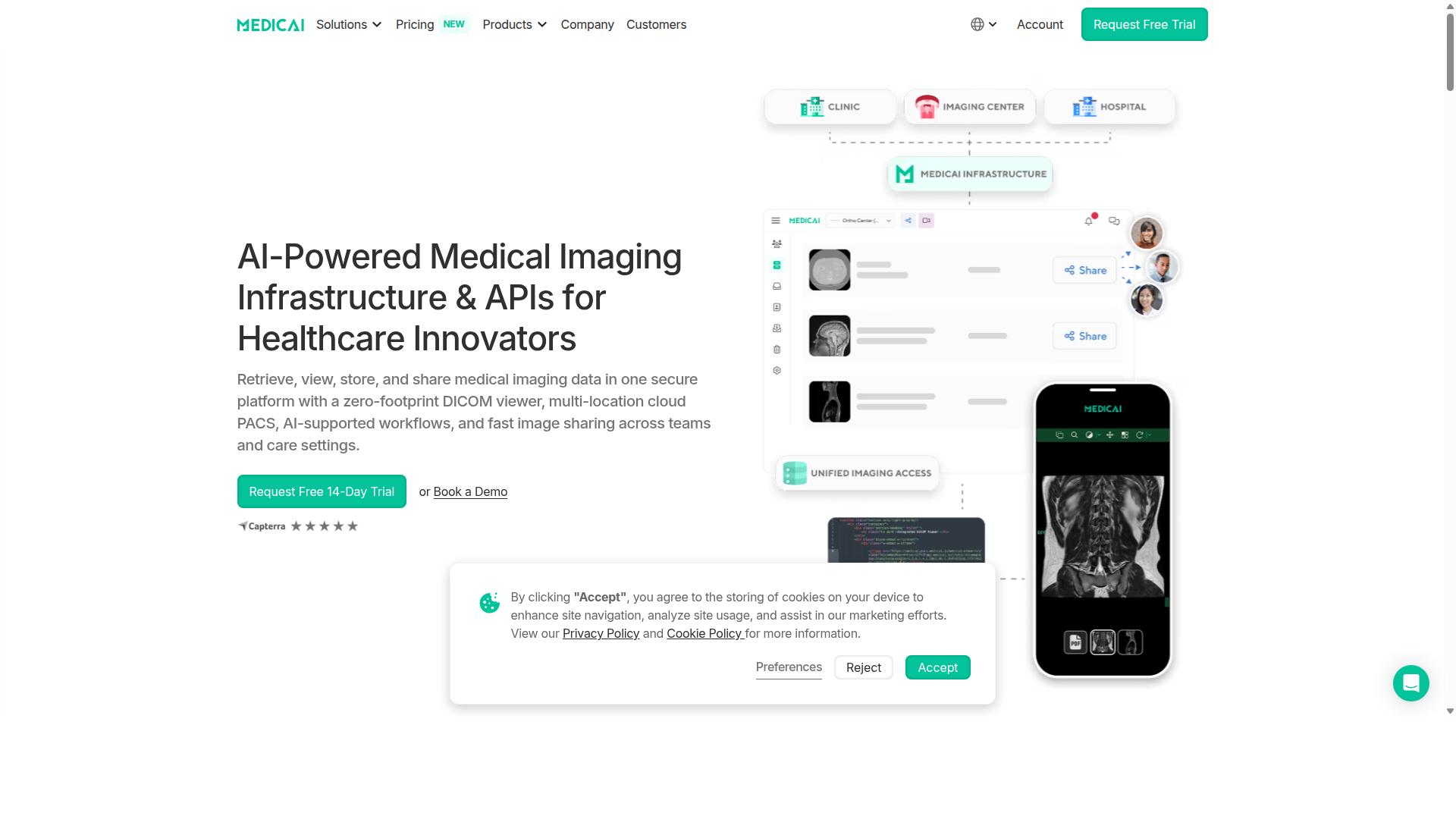
Medicai is a cloud-based medical imaging platform that unifies retrieval, viewing, storage, and sharing workflows for healthcare providers. The system supports Imaging Infrastructure as a Service (IIaaS) and delivers enterprise imaging capabilities through a single secure environment.
The platform includes a zero-footprint DICOM viewer that enables image access without local software installation. This approach reduces hardware requirements while maintaining diagnostic quality across different devices and locations.
Healthcare organizations can access the system globally through cloud infrastructure. The platform maintains HIPAA and GDPR certification to support regulatory compliance for medical imaging data handling.
Medicai functions as a multi-location cloud PACS that consolidates imaging workflows. The system supports retrieval from existing archives and enables image exchange across departments and external care settings.
The platform incorporates AI-supported workflows to assist with image analysis and routing. This capability helps radiology teams manage increasing imaging volumes while maintaining diagnostic accuracy standards.
Storage and sharing functions operate within the same integrated environment. Healthcare providers can exchange studies with referring physicians and specialists without separate transfer systems or physical media handling.
What Is Sectra?
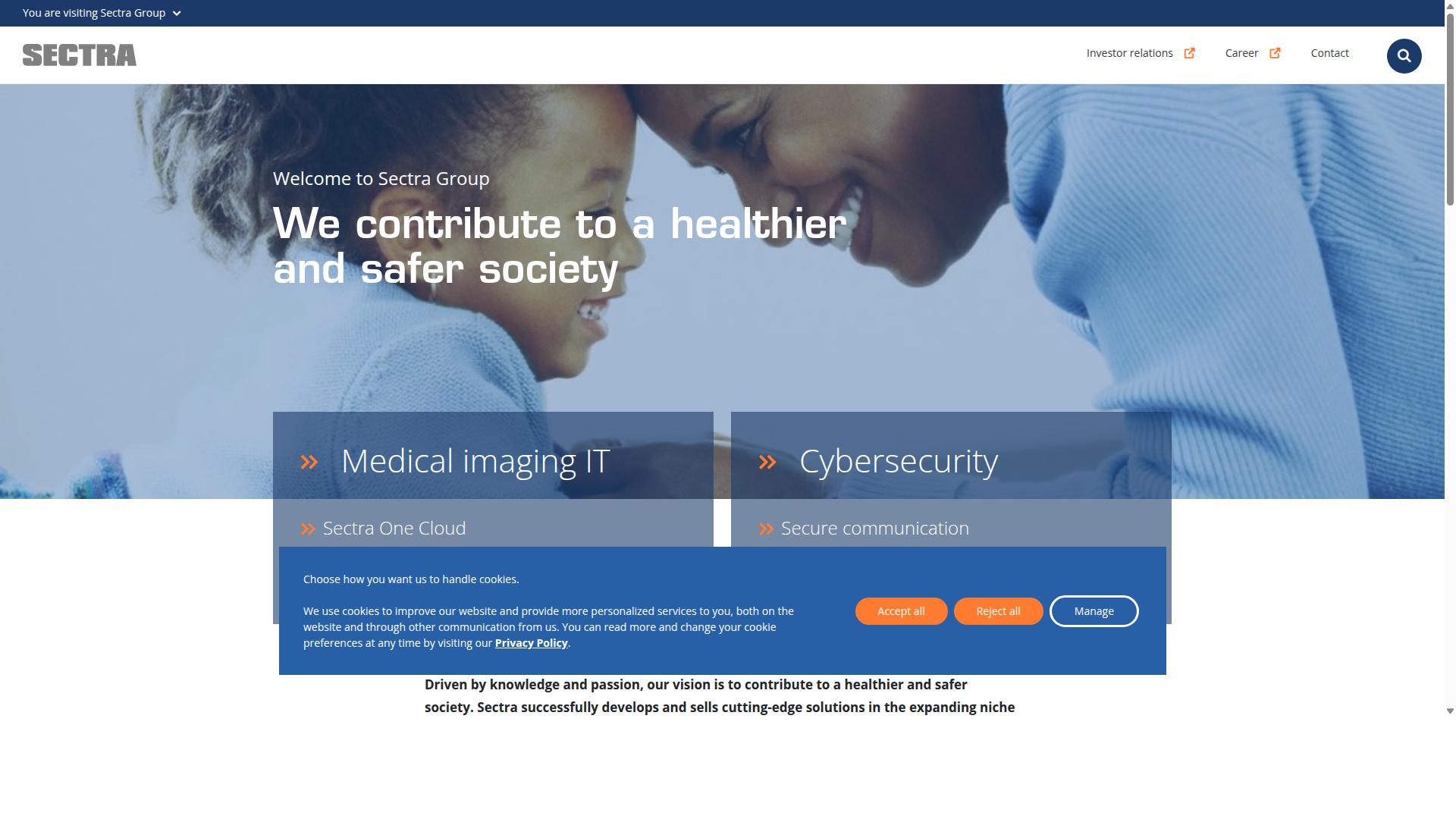
Sectra is a well-known enterprise imaging vendor that supplies on-premise and cloud PACS/VNA solutions to hospitals and imaging networks.
The company offers platforms that combine image archive functions with diagnostic viewers. These solutions address standard radiology workflow needs such as worklist management and modality worklist handling.
Users can expect support for traditional storage tiering and compression algorithms in Sectra setups. The architecture typically accommodates multi-site deployments across hospital networks.
Many organizations select Sectra when they require established PACS and VNA capabilities. The vendor focuses on maintaining image exchange standards like DICOM across different clinical settings.
Healthcare facilities often pair Sectra with existing RIS integration and EMR integration systems. This approach allows for structured reporting and audit logging within established workflows.
The platform generally includes advanced visualization tools and 3D reconstruction features. Organizations that need these capabilities may find Sectra suitable for their diagnostic viewer requirements.
What Is Medicai for Enterprise Imaging Solutions?
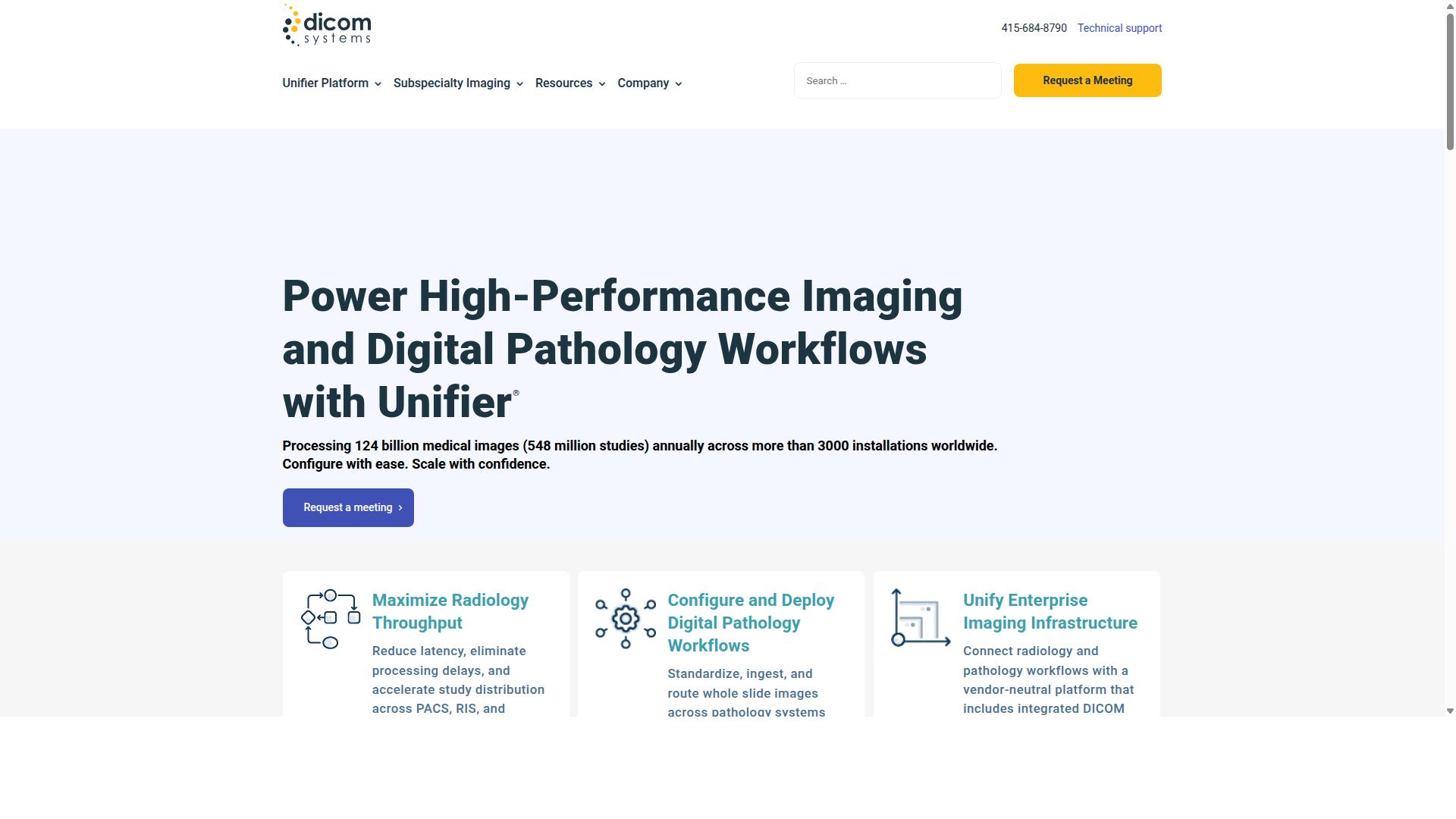
Medicai serves enterprise imaging scenarios by combining its Cloud PACS, Vendor Neutral Archive, and Medical Image Exchange modules into a single HIPAA/GDPR-compliant stack. This unified approach supports multi-site deployments where imaging data must flow securely across locations. Organizations need reliable connectivity and consistent access regardless of the number of facilities involved.
Cloud PACS provides centralized storage while enabling remote access for radiologists working across different sites. The system handles DICOM images through structured workflows that maintain quality during transfer. Multi-site teams can review studies without local server infrastructure at every location.
Vendor Neutral Archive functions as the long-term repository that stores imaging data independent of specific equipment vendors. This capability matters for facilities running mixed modality environments. Data remains accessible even when equipment changes occur over time.
Medical Image Exchange facilitates secure sharing between providers and external partners. The platform supports teleradiology workflows where remote specialists need immediate access to studies. Patient Case Management ties individual studies to complete clinical records for coordinated care.
CONNECT and RETRIEVE capabilities include Medical Imaging Uploader and DICOM Gateway for bringing external studies into the system. These tools manage incoming data from various sources while maintaining format consistency. Organizations with multiple referral channels benefit from standardized intake processes.
ACCESS, VISUALIZE, COLLABORATE features encompass Doctor Imaging Portal, Patient Imaging Portal, and DICOM Viewer for different user needs. Structured Reporting for Radiology enables consistent documentation across reading physicians. Mobile Imaging App extends access to tablet and smartphone users who need flexibility during rounds or consultations.
Additional offerings like Radiology AI Co-Pilot and AI-Powered Diagnostics work together with core imaging functions. Teleradiology support combines with Tumor Boards support for multidisciplinary case review. These elements work together to address both routine diagnostic needs and complex clinical discussions.
Features Compared
The Features Compared section breaks down three critical capability areas across both platforms.
Cloud Infrastructure and Scalability
Cloud infrastructure determines how quickly a health system can add modalities or locations without new hardware.
Medicai offers defined storage tiers that scale storage needs without hardware purchases. The Starter plan provides 500 GB cloud storage while the Standard plan includes 2 TB cloud storage. Both plans support unlimited user accounts with the Standard plan adding one connected location.
Microsoft Azure and Amazon AWS hosting back these tiers. Health systems gain the ability to expand storage as imaging volumes grow through the platform architecture.
Sectra typically follows an on-premise and cloud hybrid approach. This model often requires organizations to maintain local infrastructure alongside cloud components when adding capacity.
Enterprise customers can access custom storage configurations through Medicai. Multiple connected locations and external locations become available under custom pricing arrangements. This structure supports organizations that need to expand across sites without managing physical servers.
Integration and Workflow Automation
Integration depth decides how smoothly images and reports move between PACS, RIS, EMR, and AI tools.
Medicai provides several integration components that support radiology workflow. The DICOM Gateway handles image transfer while the modality worklist manages scheduling information. The platform processes 50M+ yearly API transactions to support these connections.
These tools connect imaging systems with existing hospital infrastructure. Organizations can route studies between different systems while maintaining data flow across departments.
Sectra generally supports HL7 and FHIR standards for system interoperability. Most enterprise imaging platforms rely on these protocols to exchange data with RIS and EMR systems.
Medicai's integration components work with the Cloud PACS and Vendor Neutral Archive. This combination allows organizations to maintain image exchange capabilities while connecting to external systems through established protocols.
Security and Compliance Standards
Compliance certifications and audit capabilities protect PHI and satisfy regulatory audits.
Medicai maintains HIPAA and GDPR compliance across its platform operations. The platform holds FDA and CEE clearance for its viewers which addresses medical device requirements in applicable regions.
These certifications cover data handling across the Cloud PACS and patient portals. Organizations gain documented compliance with privacy regulations that govern medical imaging data.
Sectra generally holds similar medical device clearances that address comparable regulatory requirements.
Medicai follows OWASP security guidelines in addition to regulatory compliance. The platform supports structured reporting for radiology and maintains audit capabilities across its imaging services to meet documentation requirements during regulatory reviews.
Pricing Compared
Transparent pricing helps teams forecast costs across storage, users, and connected facilities. Medicai publishes fixed monthly rates that eliminate surprise billing common in enterprise imaging projects.
Sectra provides custom quotes for enterprise imaging solutions. This approach requires lengthy sales cycles and negotiations before teams understand total ownership costs.
Medicai offers two public tiers with clear storage limits and user allowances. The Starter plan costs $249 per month and includes 500 GB of cloud storage with unlimited user accounts but no connected locations.
The Standard plan costs $749 per month and provides 2 TB of cloud storage with unlimited user accounts plus one connected location. Both plans support DICOM gateway setup for an additional $1,000 one-time fee per location.
Yearly billing reduces these rates by 15 percent. Starter drops to $209 monthly and Standard drops to $639 monthly when paid annually. Enterprise customers can request custom pricing for larger storage needs and multiple connected locations.
Per-study pricing remains available for organizations that prefer usage-based billing instead of fixed monthly rates. A 14-day trial of Starter plan features allows teams to test functionality without providing payment information.
Who Should Choose Medicai
Certain organizations gain immediate value from Medicai's cloud-first, zero-footprint architecture. Radiology groups, outpatient imaging centers, and multi-location specialty clinics benefit most when rapid deployment and global access matter more than local infrastructure control.
These facilities often operate across multiple sites, require seamless image exchange, and need consistent diagnostic viewing without complex hardware setups. The platform serves healthcare providers including hospitals, imaging centers, and specialty care providers across orthopedics, neurology, oncology, cardiology, ophthalmology, and other disciplines.
Virtual care providers and telemedicine platforms find particular advantage in the web-based access model. Teleradiology services and tumor boards benefit when team members need to review studies from different locations without VPN connections or specialized software installations.
Clinical trials and medical education organizations also align well with this approach. These groups handle image data across distributed teams and require secure sharing capabilities that work regardless of institutional boundaries or network configurations.
Personal injury lawyers represent another natural fit for the platform's capabilities. These professionals need reliable access to medical imaging studies for case preparation and require straightforward sharing mechanisms with clients and medical experts.
The patient portal component extends value to facilities focused on patient engagement. Organizations that prioritize patient access to their own imaging records find the zero-footprint design reduces support overhead while maintaining security standards.
Compared to traditional enterprise imaging solutions like Sectra, these user groups typically prefer Medicai when implementation timelines matter most. Multi-site deployments that would require months of infrastructure planning with on-premise PACS can launch faster through cloud deployment.
Interoperability requirements also favor this choice. Organizations using HL7 and FHIR standards for EMR integration find the cloud architecture supports these connections without the complexity often associated with legacy system connectivity.
Who Should Choose Sectra
Facilities that already run large on-premise IT infrastructures may prefer Sectra's traditional deployment model. These organizations often maintain extensive server rooms, dedicated network teams, and strict internal policies around data residency. Existing hardware investments can make cloud transitions costly and time-consuming.
Large academic hospitals with specialized research programs frequently require direct control over their imaging systems. Such institutions may value the ability to configure custom routing rules, apply specific compression algorithms, and maintain complete audit logging without external dependencies. Multi-site deployment across campuses becomes manageable when IT staff can access every component locally.
Integrated delivery networks that operate their own data centers sometimes choose on-premise PACS solutions for regulatory reasons. These networks may already have established processes for EMR integration, modality worklist management, and structured reporting that align with existing vendor relationships. Data migration projects can proceed on internal timelines when systems remain under direct organizational control.
Organizations with mature radiology workflow protocols may find comfort in proven vendor neutral archive architectures. Advanced visualization tools, 3D reconstruction capabilities, and hanging protocols can be tuned precisely to departmental preferences. AI integration stays contained within the facility's security perimeter when processing occurs on-premise.
Health systems that prioritize uptime SLA guarantees through internal redundancy may see advantages in maintaining physical infrastructure. These facilities often coordinate teleradiology services through their own networks rather than relying on external connectivity. Storage tiering policies can be adjusted according to institutional retention schedules and compliance requirements.
Who Should Choose Medicai for Enterprise Imaging Solutions
Health systems expanding across regions or adopting teleradiology programs benefit most from Medicai's global, API-first platform. These organizations often need secure image exchange and reliable access across multiple locations without adding infrastructure overhead.
Medicai delivers measurable scale. The platform processes 1M+ studies yearly and stores 1.7M+ studies while delivering 300k+ visualizations of DICOM studies in the last year. These numbers reflect enterprise-readiness for high-volume radiology workflows and image archive demands.
Health systems with strict compliance needs find support through HIPAA and GDPR compliance. The platform follows OWASP security guidelines and includes FDA/CEE cleared viewers, which addresses regulatory requirements in many markets.
Organizations managing distributed teams see value in the 10,000+ active doctors already on the platform. This network supports teleradiology programs and global multidisciplinary tumor boards, including efforts that helped Ukrainian refugee patients access cancer treatments.
Teams focused on integration appreciate the 50M+ yearly API transactions and the Microsoft Azure partnership. These capabilities facilitate connections with existing PACS, VNA, RIS, and EMR systems through standard protocols such as DICOM, HL7, and FHIR.
Clinics and hospitals seeking reduced diagnosis time can reference the reported 65 percent reduction achieved by current users. This improvement stems from streamlined access to studies and faster collaboration across sites.
Institutions handling complex multi-site deployments benefit from the cloud architecture that supports 70 clinics and hospitals already running on the platform. The system handles data migration, image exchange, and worklist management without requiring on-premise hardware expansion.
Final Verdict
The Final Verdict condenses the decisive differences into a short recommendation. Enterprise imaging platforms must balance compliance, scalability, and interoperability while maintaining diagnostic quality across multiple sites.
Medicai meets these requirements with 50M+ yearly API transactions, 1M+ studies processed yearly, and full HIPAA/GDPR compliance. The platform also carries FDA and CEE clearance for use in regulated clinical environments.
These metrics point to a system built for sustained high-volume operations. Strong API throughput and study volume capacity support both multi-site deployments and teleradiology workflows without performance degradation.
Sectra remains a recognized vendor in enterprise imaging, yet its published metrics on API transactions and annual study throughput are less transparent. Organizations evaluating both solutions often cite Medicai's documented scale and regulatory clearances as decisive factors.
Teams seeking a compliant, high-capacity vendor neutral archive should contact Medicai directly. Medicai USA is located at 7901 4th St N, STE 300, St. Petersburg, FL, 33702, reachable at +1 (832) 220 1035. Medicai Romania operates at 53-55 N Filipescu, 5th Floor, Sector 2, Bucharest, 020961, reachable at +40 316 305 875. The sales team can be reached at [email protected] for enterprise imaging evaluations.